
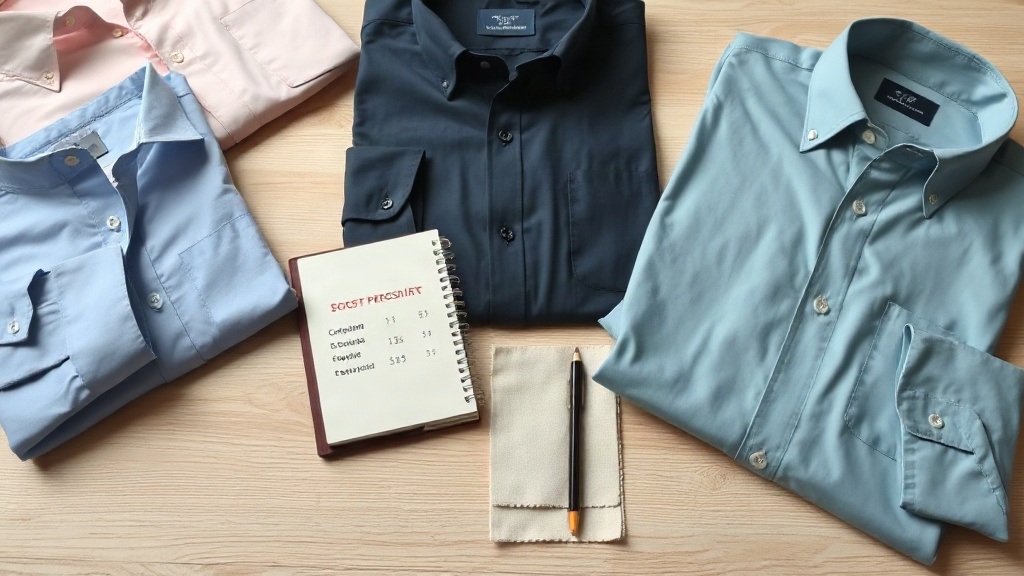
When you invest in custom premium shirts, you are not just buying fabric and thread; you are buying an experience for your customers or team. But how do you know if you are getting a fair deal? The answer lies in a simple but powerful metric: CPS, or cost per shirt. In this guide, we will break down what CPS means, why it matters, and how to use it to make smarter purchasing decisions for your custom premium shirts.
What Is CPS and Why Does It Matter?
CPS stands for cost per shirt. It is the total cost of your order divided by the number of shirts you receive. While it sounds straightforward, many buyers overlook hidden factors that inflate CPS and diminish the perceived value of their custom premium shirts. Understanding CPS allows you to compare quotes apples-to-apples, negotiate better terms, and ensure that every dollar you spend translates into tangible quality.
Why Premium Shirts Justify a Higher CPS
Not all shirts are created equal. A premium shirt typically features superior cotton, reinforced stitching, and a tailored fit that lasts wash after wash. When you calculate CPS over the lifespan of the garment, the higher upfront cost often results in a lower long-term CPS because the shirts do not need to be replaced as frequently. In contrast, cheap shirts may have a low initial CPS but end up costing more due to rapid deterioration.
How to Calculate CPS for Your Custom Shirt Order
Calculating CPS is more than dividing the invoice total by the quantity. To get an accurate picture, you must include all associated costs. Here is a step-by-step approach:
- Base cost per shirt: The price quoted by the supplier for the shirt itself.
- Design and setup fees: One-time charges for artwork, screen setup, or embroidery digitizing.
- Shipping and handling: Delivery charges, customs, and insurance.
- Taxes and duties: Any applicable local or international taxes.
- Additional services: Rush orders, individual poly-bagging, or special labeling.
Add all these costs together and divide by the number of shirts. The result is your true CPS. For example, if you order 100 shirts at $10 each, plus $200 setup, $100 shipping, and $50 tax, your total cost is $1,350. Your CPS is $13.50. If you order 200 shirts, the setup and shipping costs are spread over more units, reducing your CPS to $11.75. This illustrates how order volume directly impacts CPS.
Factors That Influence CPS
Several variables can raise or lower your CPS. Understanding them helps you optimize your order.
- Quantity: Larger orders benefit from economies of scale, lowering CPS.
- Shirt quality: Premium materials and construction increase the base cost but may reduce long-term CPS.
- Decoration method: Screen printing is cost-effective for large runs, while embroidery or DTG may have higher per-unit costs.
- Number of colors: More colors in screen printing require more screens, raising setup fees and thus CPS.
- Turnaround time: Rush orders often incur surcharges that increase CPS.
- Supplier location: Overseas suppliers may offer lower base costs but higher shipping and longer lead times, affecting overall CPS.
Strategies to Optimize Your CPS Without Compromising Quality
You want the best custom premium shirts for your budget, not the cheapest. Here are proven tactics to get the most value.
1. Increase Order Quantity
As shown earlier, spreading fixed costs over more units is the most effective way to lower CPS. If you anticipate future needs, consider ordering extra shirts to store for later. Just ensure you have proper storage to maintain quality.
2. Choose the Right Decoration Method
For large orders with simple designs, screen printing offers the lowest CPS. For smaller orders or complex designs, digital printing or DTG might be more economical despite a higher per-unit cost, because they eliminate setup fees. Embroidery adds a premium feel but can significantly raise CPS, so reserve it for logos or small text.
3. Simplify Your Design
Each additional color in screen printing adds a setup fee and a screen charge. By reducing the number of colors, you can lower both setup and per-unit costs, directly reducing CPS. Minimalist designs often look more premium anyway.
4. Negotiate with Suppliers
Do not be afraid to ask for volume discounts or waive setup fees. Many suppliers are willing to negotiate, especially if you are a repeat customer. A lower base cost directly improves your CPS.
5. Plan Ahead
Rush charges can add 20-30% to your total cost. By planning your order well in advance, you avoid expedited shipping and production fees, keeping your CPS in check.
Comparing CPS Across Different Shirt Types
To illustrate how CPS varies, let us compare three common scenarios for 100 shirts with a one-color logo:
- Basic cotton t-shirt: Base cost $5, setup $50, shipping $80, total $630, CPS $6.30.
- Premium ring-spun cotton: Base cost $9, setup $50, shipping $80, total $1,030, CPS $10.30.
- Performance blend with embroidery: Base cost $15, digitizing $100, shipping $80, total $1,680, CPS $16.80.
While the premium options have a higher CPS, they offer better comfort, durability, and brand perception. The key is to align your CPS with your goals. For a high-end brand, a higher CPS is justified; for a casual event, a lower CPS may suffice.
Common Pitfalls That Inflate CPS
Even experienced buyers can fall into traps that increase CPS unnecessarily. Watch out for these:
- Hidden fees: Some suppliers quote a low base price but add charges for screens, proofs, or packaging. Always ask for an all-in quote.
- Over-ordering: While bulk lowers CPS, ordering too many shirts that go unsold or unused wastes money. Find the sweet spot.
- Ignoring quality: A low CPS means nothing if the shirts fall apart after one wash. Consider the cost per wear, not just the upfront CPS.
- Last-minute changes: Altering the design after production starts can incur rework fees, raising CPS.
- Not comparing apples to apples: Ensure you are comparing the same shirt quality, decoration, and terms when evaluating CPS.
How to Use CPS to Evaluate Suppliers
When requesting quotes, ask suppliers to provide a detailed breakdown that includes all costs. Then calculate the CPS for each. A supplier with a slightly higher base price but no setup fees might offer a lower CPS overall. Also, consider the supplier's reputation for quality and reliability; a missed deadline can cost you far more than a few cents per shirt.
Frequently Asked Questions About CPS and Custom Premium Shirts
What is a good CPS for custom premium shirts?
A good CPS depends on your budget and quality expectations. For premium shirts, a CPS between $10 and $20 is common, but you can lower it by ordering in larger quantities or simplifying the design. Focus on value rather than the absolute lowest number.
How can I reduce CPS without sacrificing quality?
Increase your order quantity, choose a decoration method that suits your design (like screen printing for large runs), simplify your artwork to fewer colors, and negotiate with suppliers. Planning ahead also avoids rush fees. These steps can significantly lower your CPS while maintaining the premium feel of your shirts.
Does CPS include shipping and taxes?
Yes, for an accurate CPS, you must include all costs: base shirt price, setup fees, shipping, taxes, and any additional services. Only then can you compare quotes fairly and understand the true cost per shirt.
Why do premium shirts have a higher CPS?
Premium shirts use higher-quality materials, better construction, and often ethical manufacturing, which increases the base cost. However, they last longer and look better, so the cost per wear may be lower than cheaper alternatives. The higher CPS is an investment in your brand image.
Can I get a lower CPS for a small order?
Small orders typically have a higher CPS because fixed costs are spread over fewer units. To lower CPS for small orders, choose digital printing (no setup fees), keep the design simple, and ask if the supplier has any promotional discounts. Alternatively, consider ordering a slightly larger quantity to hit a price break.
Understanding CPS empowers you to make informed decisions when purchasing custom premium shirts. By calculating the true cost per shirt and applying strategies to optimize it, you can get the best value for your money without compromising on quality. Whether you are outfitting a team, promoting a brand, or creating merchandise, keeping an eye on CPS ensures your investment pays off.