
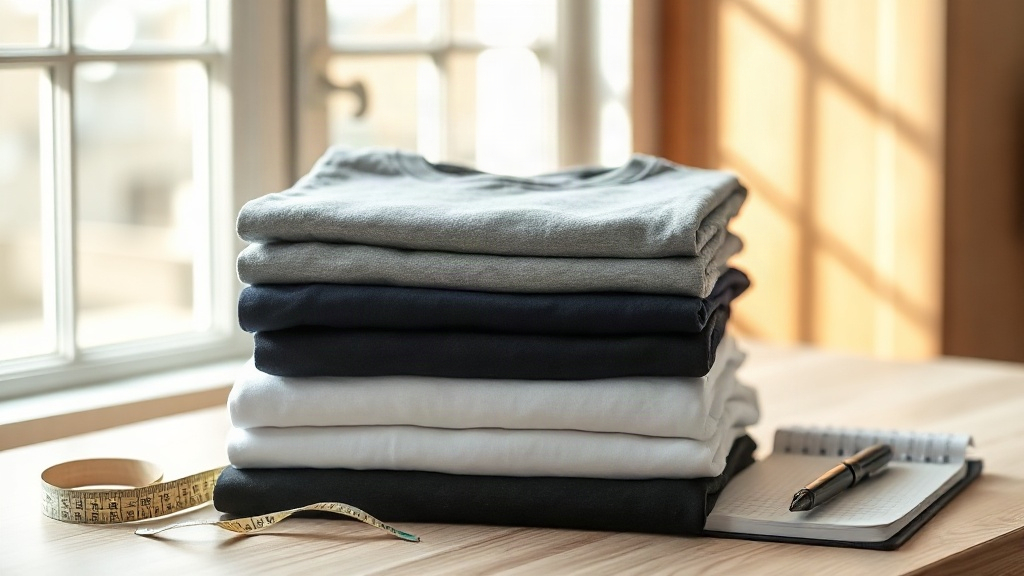
If you're sourcing custom premium t-shirts for your brand, team, or event, you've likely encountered the term CPS. It stands for cost per shirt, and it's the single most important number to track when you're trying to balance quality and budget. But CPS isn't just a simple division of total cost by quantity. It's a dynamic figure shaped by fabric choice, printing method, order size, and even the time of year you place your order. In this guide, we'll break down exactly what goes into CPS for premium t-shirts, how to calculate it accurately, and how to keep it low without sacrificing the soft, durable feel your customers expect.
What Exactly Is CPS in the Custom Apparel World?
CPS stands for cost per shirt, but in the custom apparel industry, it's more than a raw number. It represents the true landed cost of each garment after factoring in the blank shirt, decoration, shipping, and any additional services like tagging or folding. For premium t-shirts, CPS often ranges from $8 to $25 depending on these variables. Knowing your CPS helps you set retail prices, negotiate with suppliers, and compare quotes apples-to-apples. Without it, you might think you're getting a deal on a $5 blank, only to find that the final decorated cost is higher than a $9 premium option.
At Smart Blanks Market, we work with brands that care about both quality and margin. That's why we always encourage customers to calculate CPS before committing to a fabric or print method. A lower CPS doesn't always mean better value if the shirt shrinks after one wash or the print cracks within a month. Premium t-shirts are an investment in your brand's image, and CPS should reflect that long-term value.
Key Factors That Influence Your CPS
Several moving parts determine your final CPS. Understanding each one gives you leverage to optimize your order.
1. Fabric and Construction
Not all blanks are created equal. Premium t-shirts typically use combed ring-spun cotton, which is softer and more durable than standard carded cotton. Some blends include polyester for moisture-wicking or tri-blend for a vintage feel. The fabric weight also matters: a 5.5 oz shirt will cost more than a 4.2 oz one, but it may last longer and hold its shape better. When you choose a heavier, higher-quality fabric, your CPS goes up, but so does customer satisfaction and repeat business.
2. Printing Method
Screen printing, direct-to-garment (DTG), embroidery, and heat transfer all have different cost structures. Screen printing has a high setup cost per color but a low cost per piece, making it ideal for large orders. DTG has no setup fee but a higher per-piece cost, which suits small batches or complex designs. For a typical 50-shirt order with a one-color logo, screen printing might add $2 per shirt to your CPS, while DTG could add $6 or more. Embroidery is usually the most expensive per piece, but it offers a premium look that can justify a higher retail price.
3. Order Quantity
Economies of scale are real. Most suppliers, including Smart Blanks Market, offer tiered pricing: the more you buy, the less you pay per unit. A single premium t-shirt might have a CPS of $18, while an order of 100 could drop that to $11. This is because fixed costs like screen setup, shipping, and labor are spread across more units. If you're planning a recurring drop or a large event, ordering in bulk is one of the fastest ways to lower your CPS.
4. Additional Services
Custom neck labels, hang tags, poly-bagging, and individual folding all add to your CPS. These might seem minor, but they can add $0.50 to $2 per shirt. For a premium brand, custom tagging is often worth it because it elevates the unboxing experience. Just be sure to factor these costs into your CPS calculation so you're not caught off guard.
How to Calculate CPS Accurately
Calculating CPS is straightforward, but you need to include every cost. Here's a simple formula:
- Blank shirt cost (per unit, including any size upcharges)
- Decoration cost (setup fees divided by quantity, plus per-piece print cost)
- Shipping and handling (inbound to you or drop-shipped to your customer)
- Additional services (tagging, bagging, folding)
- Taxes and duties (if applicable)
Add all these together and divide by the number of shirts. For example, if you order 100 shirts at $6 each, pay a $50 screen setup, $1 per shirt for printing, $100 total shipping, and $0.75 per shirt for tagging, your total cost is $600 + $50 + $100 + $100 + $75 = $925. Divide by 100, and your CPS is $9.25. That's your true cost per shirt.
Once you know your CPS, you can set a retail price that covers your overhead and profit. A common rule of thumb is to multiply CPS by 2.5 to 3 for direct-to-consumer sales, or by 2 for wholesale. But premium brands often command higher multiples because of perceived value.
Strategies to Lower Your CPS Without Compromising Quality
You don't have to settle for a high CPS. Here are proven tactics to reduce it while keeping your t-shirts premium.
Consolidate Orders
Instead of placing multiple small orders throughout the year, combine them into one or two larger orders. This reduces setup fees and shipping costs per unit. If you have different designs, consider using the same shirt style and colors to hit higher quantity tiers.
Choose the Right Print Method for the Job
For large orders with simple designs, screen printing is almost always the most cost-effective. For small batches or photorealistic images, DTG might be better despite the higher per-piece cost. Embroidery is best for logos that need a premium, textured look, but limit it to left-chest or cap applications to keep CPS down.
Negotiate with Your Supplier
Many suppliers, including Smart Blanks Market, are open to negotiation for repeat customers or large volumes. Ask about price breaks at 50, 100, 250, and 500 units. Sometimes a small increase in quantity can drop your CPS significantly. Also, inquire about off-season discounts or overstock specials on premium blanks.
Simplify Additional Services
Custom tagging and individual poly-bagging are nice touches, but they add up. If you're selling online, you might skip individual bagging and instead ship in bulk to your fulfillment center. If you're a small brand, consider using a standard size tag and focusing your branding on the print itself. Every dollar you save here lowers your CPS.
Why CPS Matters for Premium T-Shirts More Than Ever
In a market flooded with cheap, disposable apparel, premium t-shirts stand out because of their quality and longevity. But that quality comes at a cost, and CPS is how you manage it. By understanding your CPS, you can make informed decisions about fabric, printing, and order size. You can also communicate value to your customers: a shirt that costs you $12 CPS and sells for $35 is a better business proposition than a $5 shirt selling for $15 if the former generates repeat purchases and fewer returns.
At Smart Blanks Market, we've helped countless brands dial in their CPS by providing transparent pricing and expert advice. Whether you're ordering 20 shirts for a startup team or 2,000 for a retail launch, we're here to help you get the best possible CPS without cutting corners.
Frequently Asked Questions About CPS and Custom Premium T-Shirts
What is a good CPS for a premium t-shirt?
A good CPS for a premium t-shirt depends on your business model. For direct-to-consumer brands, aiming for a CPS between $8 and $15 is typical, allowing you to retail at $25 to $45. For wholesale, you might target a CPS of $6 to $10 and sell at $12 to $20. The key is to ensure your CPS leaves enough margin to cover marketing, overhead, and profit.
How does order quantity affect CPS?
Order quantity has a significant impact on CPS because fixed costs are spread across more units. For example, a screen setup fee of $50 adds $5 per shirt on a 10-shirt order but only $0.50 per shirt on a 100-shirt order. Similarly, shipping and handling per unit decreases with larger orders. So, increasing your quantity is one of the most effective ways to lower your CPS.
Can I get a lower CPS by using a different fabric?
Yes, but be careful. Switching from a premium combed ring-spun cotton to a standard carded cotton can lower your CPS by $1 to $3 per shirt. However, the cheaper fabric may feel rougher, shrink more, and fade faster, leading to unhappy customers and returns. If you're building a premium brand, it's usually worth paying a bit more for better fabric because it supports higher retail prices and repeat sales.
Does CPS include shipping and taxes?
A true CPS should include all landed costs: the blank shirt, decoration, shipping, taxes, and any additional services. If you exclude shipping and taxes, you're looking at a partial cost per shirt, which can mislead your pricing decisions. Always calculate your CPS as the total cost divided by the number of shirts, including every expense.
How can I reduce CPS without sacrificing quality?
You can reduce CPS by consolidating orders, choosing the most cost-effective print method for your design, negotiating bulk pricing with your supplier, and simplifying additional services like custom tagging. Another strategy is to standardize on a few core shirt styles and colors, which allows you to buy in larger quantities and hit better price breaks. At Smart Blanks Market, we can help you find the sweet spot between quality and cost.